Dyeing for some colour, naturally
Why I decided to dye fabric myself using indigo, madder and marigold.

Are you a dopamine dresser who opts for bright, bold colours in your wardrobe, or do you like to keep it calm with nudes and earthy tones? Either way, the colours you choose are probably really important to you.
Spend approximately 30 seconds on Instagram and you’ll likely come across a colour analysis appointment: “These shades suit you, these wash you out.” Suddenly we’re all neatly categorised into seasonal boxes – like Autumn, TRUE Autumn (like the other was a lie?), Summer, Light Summer, Sensitive Spring (that last one’s obviously not real, but if it was, it would probably be my category).
Anyway, the point is: colour matters to us. It can make us look and feel incredible, or it can do the opposite.
But while we spend so much time thinking about how colour looks, we rarely think about where it actually comes from.
The dyeing processes used across most of the fashion industry rely heavily on synthetic chemicals to create the bright, consistent colours we’ve all come to expect. We don’t think twice about picking up a vivid pink T-shirt and throwing it in the wash (with everything except white, obviously – I’m not responsible for that disaster). But those colours come at a cost.
There’s also the issue of microplastics – a word that gets thrown around a lot, but is worth properly understanding. When synthetic fabrics are washed, they shed tiny plastic fibres into our waterways. A 2017 report from the International Union for Conservation of Nature estimated that around 35% of microplastics in the ocean come from laundering synthetic textiles. Which is… not ideal.
It also gets a bit more uncomfortable the more you look into it. Some research suggests these fibres can carry residual chemicals from the dyeing process, so it’s not just plastic – it’s chemically treated plastic making its way into ecosystems (and, eventually, back to us).
Now, I’m no scientist, but everything I’ve read so far has made me want to boycott fast fashion altogether. And then maybe sell all my belongings and move to the woods, into a cute cottage with a garden full of roses next to a stream, get some runner ducks and a pet cow… ahhh…
I digress.
Taking a step back, I started to think about what harm this is actually causing – not only to the planet, but potentially to our bodies when we wear these chemically dyed, plastic-based clothes all day, every day.
Anyway, it’s been a dream of mine for a while now to have my own slow fashion brand, so why not make the colour itself the main focus – dyed naturally, by me, at home?
The “why not” turns out to be: the effort this takes.
I won’t lie, this is a proper labour of love, and the issues I’ve just mentioned need to be something you genuinely care about, otherwise you simply wouldn’t bother. But for me, it is worth it.
Also, I get to look and feel like a witch with a giant cauldron making potions, while I cackle and mutter about how “my enemies will rue the day”. (I don’t have any enemies, to be clear. I hope.)
But more importantly, I want us to care more about the things we wear and to actually know how they were made. Call me crazy, but I don’t want to be wearing toxic clothes that, every time I wash them, release plastic into our waterways and harm wildlife.
Luckily, there are some experts out there who have done lots of the hard work and research for us. I would absolutely recommend the following for anyone interested in natural dyeing:
Botanical Colour at Your Fingertips by Rebecca Desnos (she also shares wonderful guides on foraging and dyeing – her Instagram is well worth a follow)
Botanical Dyes by Babs Behan (a true expert, and someone I hope to keep learning from for a long time – she also runs retreats, which I would love to attend one day and report back on)
So: why these three dyes specifically? Here’s a bit of history on each, and the very personal, very non-scientific reasons I chose to start here.

Indigo 💙
Indigo is one of the oldest dyes in human history, with evidence of its use going back around 6,000 years (including fabric fragments found in Peru from around 4,000 BC, and textiles discovered in ancient Egypt). Its name comes from the Greek word indikon, meaning “from India”, where much of the world’s supply originated for centuries. Before synthetic dyes were invented in the mid-1800s, it was so precious that only royalty and aristocracy could afford it.
I chose to start with indigo partly because of its completely unique qualities, but also because blue is my favourite colour. (At the moment… this does change regularly.)

Madder 🌸
Madder comes from the roots of the plant Rubia tinctorum. Madder-dyed cloth has been found at the ancient Indus Valley site of Mohenjo-daro (around 3,000 BC), and in the tomb of Tutankhamun. It was also discovered in Viking-age excavations in York, so those Vikings must have been very well dressed.
The dye produces a range of colours from deep brick red to soft, warm pink, depending on how it’s used. I chose madder because I wanted something soft and feminine in the collection – a gentle pink that still comes entirely from a plant.
Marigold 🌼
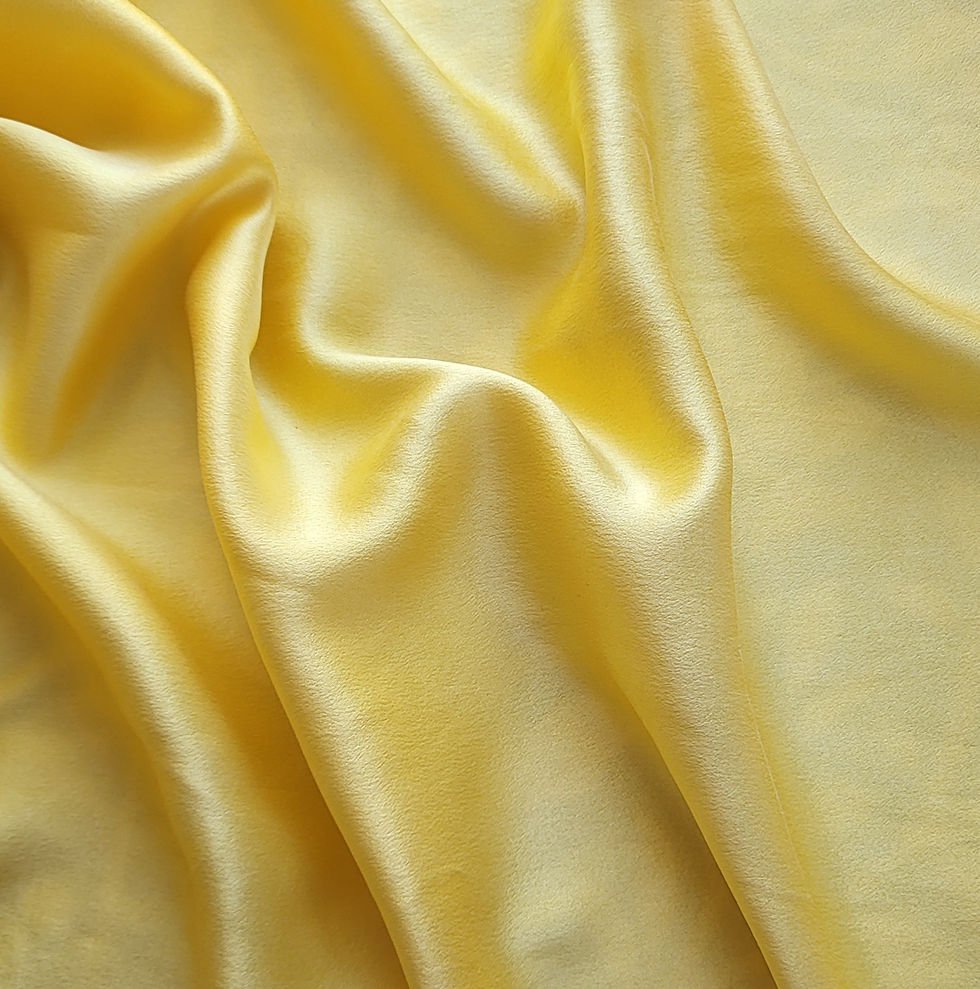
Marigold has been used as a dye for hundreds of years across many cultures, particularly in South Asia and Central America. It produces a clear, warm yellow that takes beautifully to natural fibres, and is often recommended as a good starting point for beginners.
My reason for choosing marigold: I love daffodils (again, at the moment), and I wanted to make a true daffodil-yellow dress. I started experimenting with the dye and completely fell in love with the results. The warmth of the yellow on peace silk is something else. So, marigold it was.
So why does any of this madder?
I’m not going to stand here and tell you that natural dyeing is perfect, or that it solves the entire problem of fashion polluting the planet. But I do believe that, as consumers, we have more power than we think, and we can make a difference by changing what we buy and where it comes from.
If we keep buying plastic clothes dyed in harsh chemicals, they’ll keep making them… and so on. I’ll get off my soapbox now.
Every Blodau piece is plastic free, and coloured with plant dyes I’ve sourced as locally as possible. I dye everything at home, in my house and garden (when the weather allows). It’s a tiny-scale project compared to huge fast fashion brands, but it’s good enough for now.
What I love most is that nothing is ever exactly the same. The colour may shift slightly over years of wear, no two batches are identical, and the whole process is a little unpredictable.
It feels like making something that’s actually alive – and when you think about it, it sort of is🌿
If you’re curious about natural dyeing and want to go down the same rabbit hole I did, I’d really recommend starting with Rebecca Desnos and Babs Behan . Just don’t say I didn’t warn you.
Ciao for now Olivia, Blodau 🌸